Introduzione
Buying veterinary surgical equipment is not a simple catalog exercise. A product can look impressive in a quotation, match a budget, and still fail once it enters a real operating room. The most expensive mistakes usually do not begin with a defective machine. They begin with an incomplete buying process: unclear clinical needs, weak document verification, overlooked cleaning requirements, incompatible utilities, or an unrealistic assumption that the lowest purchase price equals the lowest cost.
For a veterinary clinic, hospital, teaching facility, or distributor, veterinary surgical equipment influences far more than the procedure itself. It affects staff movement, patient positioning, infection-control routines, turnaround time, training, maintenance, and the ability to keep a surgical schedule running when a component fails. That is why a responsible veterinary surgical equipment buyer should evaluate veterinary surgical equipment as part of a working system rather than as a collection of unrelated products.
The term veterinary surgical equipment can cover operating tables, surgical lights, anesthesia-related systems, electrosurgical units, suction devices, patient monitors, instrument sets, infusion devices, warming solutions, endoscopic equipment, and supporting furniture. Not every facility needs the same configuration. A general practice performing routine procedures has different requirements from a referral center, mobile service, university hospital, or mixed-animal facility. The correct veterinary surgical equipment is therefore the equipment that fits the intended procedures, species range, room, team, cleaning workflow, service environment, and local requirements.
This guide explains the most common purchasing errors and shows how to replace vague product comparison with evidence-based procurement. It does not provide clinical instructions or legal advice. Instead, it gives veterinary surgical equipment buyers a practical framework for asking better questions, comparing veterinary surgical equipment suppliers, documenting decisions, and accepting veterinary surgical equipment only after the promised configuration has been verified.
Why Veterinary Surgical Equipment Purchases Fail
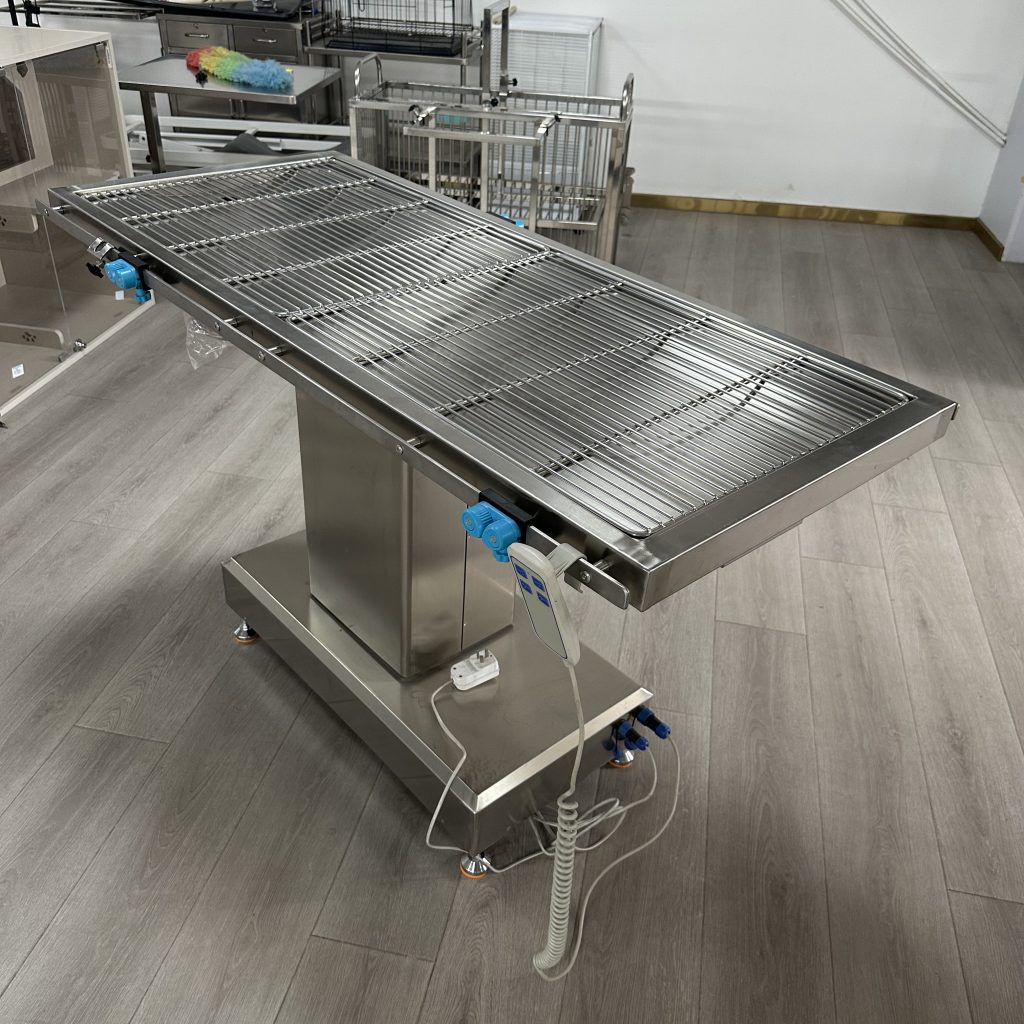
Many veterinary surgical equipment buyers begin with a list of models and prices. That approach feels efficient, but it skips the most important question: what problem must veterinary surgical equipment solve inside the actual workflow? Two products may appear comparable while differing in load capacity, movement range, cleaning compatibility, power requirements, accessories, consumables, interface design, or local service support. If those differences are discovered after delivery, the veterinary surgical equipment buyer may face delays, retrofitting, unplanned purchases, or veterinary surgical equipment that staff avoid using.
Another failure occurs when every item of veterinary surgical equipment is assessed separately. An operating table may be stable, a light may be bright, and a monitor may have the required parameters, yet the complete setup can still create conflicts. A light arm may not reach the intended field. A table base may obstruct staff or imaging access. A device may require an outlet, gas connection, data interface, or mounting accessory that the room does not provide. Veterinary surgical equipment must work together physically and operationally.
Documentation creates another blind spot. A brochure is marketing material, not proof of the exact supplied configuration. A certificate logo on a product page is not enough to establish scope, validity, model coverage, or relevance to the destination market. In the United States, the FDA states that devices intended for animal use generally do not require 510(k), PMA, or other premarket approval, while manufacturers and distributors remain responsible for safety, effectiveness, and proper labeling. This makes buyer-side verification especially important; the absence of premarket approval is not evidence that all veterinary surgical equipment is equivalent.
The practical lesson is simple: a purchase fails when assumptions replace evidence. The table below summarizes the warning signs.
Common Buying Mistakes and Their Consequences
| Buying mistake | What the veterinary surgical equipment buyer assumes | Likely consequence | Evidence to request |
| Choosing veterinary surgical equipment from a brochure alone | The image and headline specifications describe the exact unit | Configuration mismatch or missing accessories | Model-specific datasheet, configuration list, labeled photos, and quotation annex |
| Selecting the lowest price | Purchase price represents total cost | Higher spending on consumables, repairs, freight, and downtime | Five-year cost model and consumables list |
| Accepting a logo as compliance proof | Any certificate covers all veterinary surgical equipment | Invalid, expired, or irrelevant documentation | Full certificate, scope, issuing body, model list, and verification route |
| Ignoring reprocessing | Every surface and component can be cleaned the same way | Damage, inadequate cleaning, or workflow delays | Manufacturer cleaning, disinfection, and sterilization instructions |
| Skipping room and utility checks | The veterinary surgical equipment will fit and connect on arrival | Installation delay or unsafe workaround | Dimensional drawing, utility schedule, plug type, load data, and site checklist |
| Assuming training is intuitive | Experienced staff can operate every interface | Use error, inconsistent setup, and low adoption | Training plan, manual, quick guide, and competency record |
| Failing to define acceptance criteria | Delivery equals successful completion | Disputes over performance or missing items | Written factory and site acceptance checklist |
Buying Features Before Defining the Clinical Workflow
The first major error is asking, “Which model has the most features?” before asking, “Which procedures, patients, users, and room conditions must this system support?” Feature-heavy veterinary surgical equipment can be attractive, but unused complexity adds cost and training burden. At the same time, under-specified equipment can restrict positioning, visibility, monitoring, or workflow.
Start with an intended-use statement written in operational language. Identify the types and approximate frequency of procedures, the smallest and largest expected patients, whether the room supports more than one clinical service, and which staff roles will set up, operate, clean, and maintain the veterinary surgical equipment. If the facility treats multiple species, do not rely on a broad label such as “small animal” or “large animal.” Define actual weight, body dimensions, positioning needs, and handling constraints.
Next, map the procedure from preparation to room reset. Note where the patient enters, how the patient is transferred, where anesthesia and monitoring devices sit, how staff circulate, which surfaces become contaminated, and where used instruments go. This map often exposes requirements that a product brochure will never reveal. Veterinary surgical equipment should support the full sequence, not only the moment when the procedure is underway.
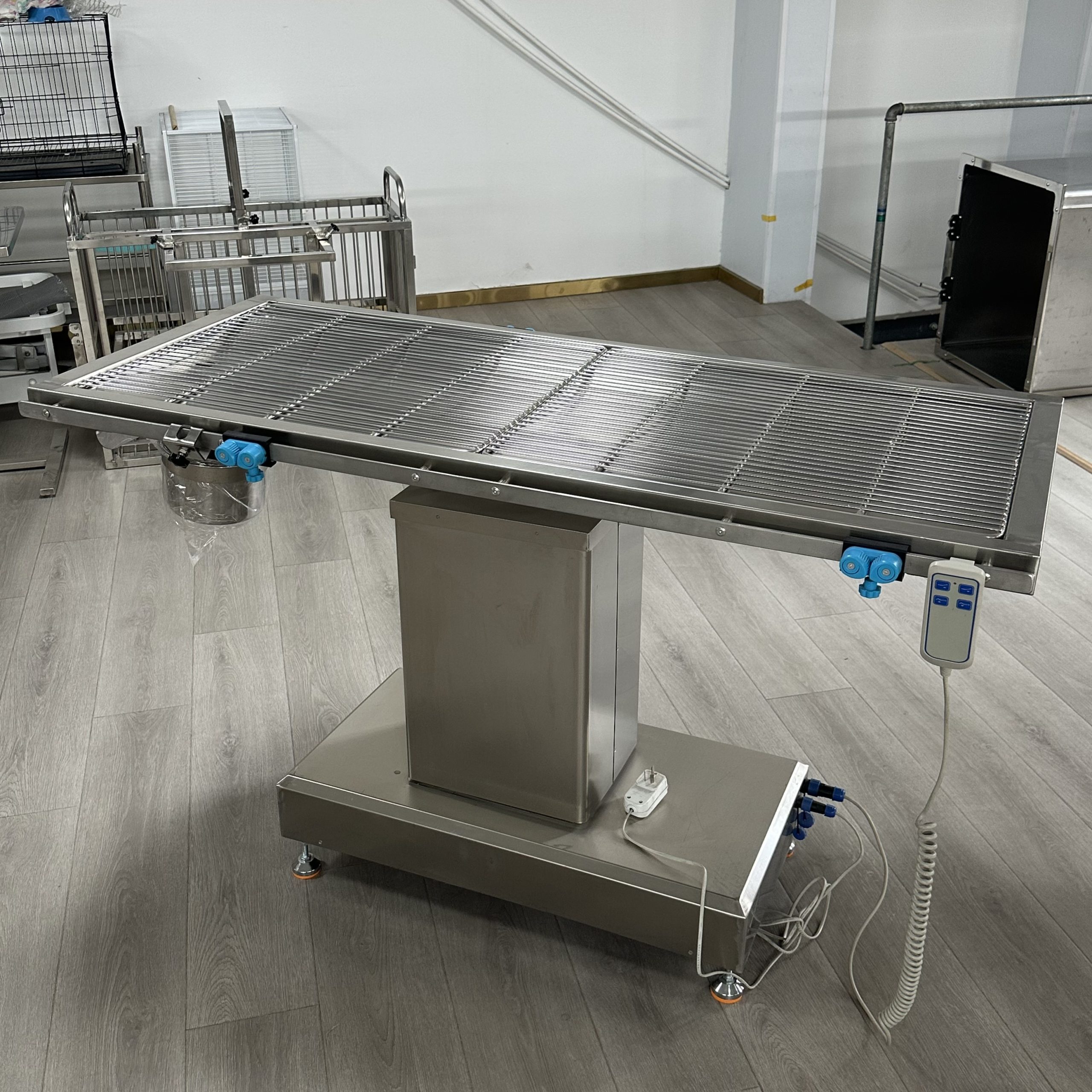
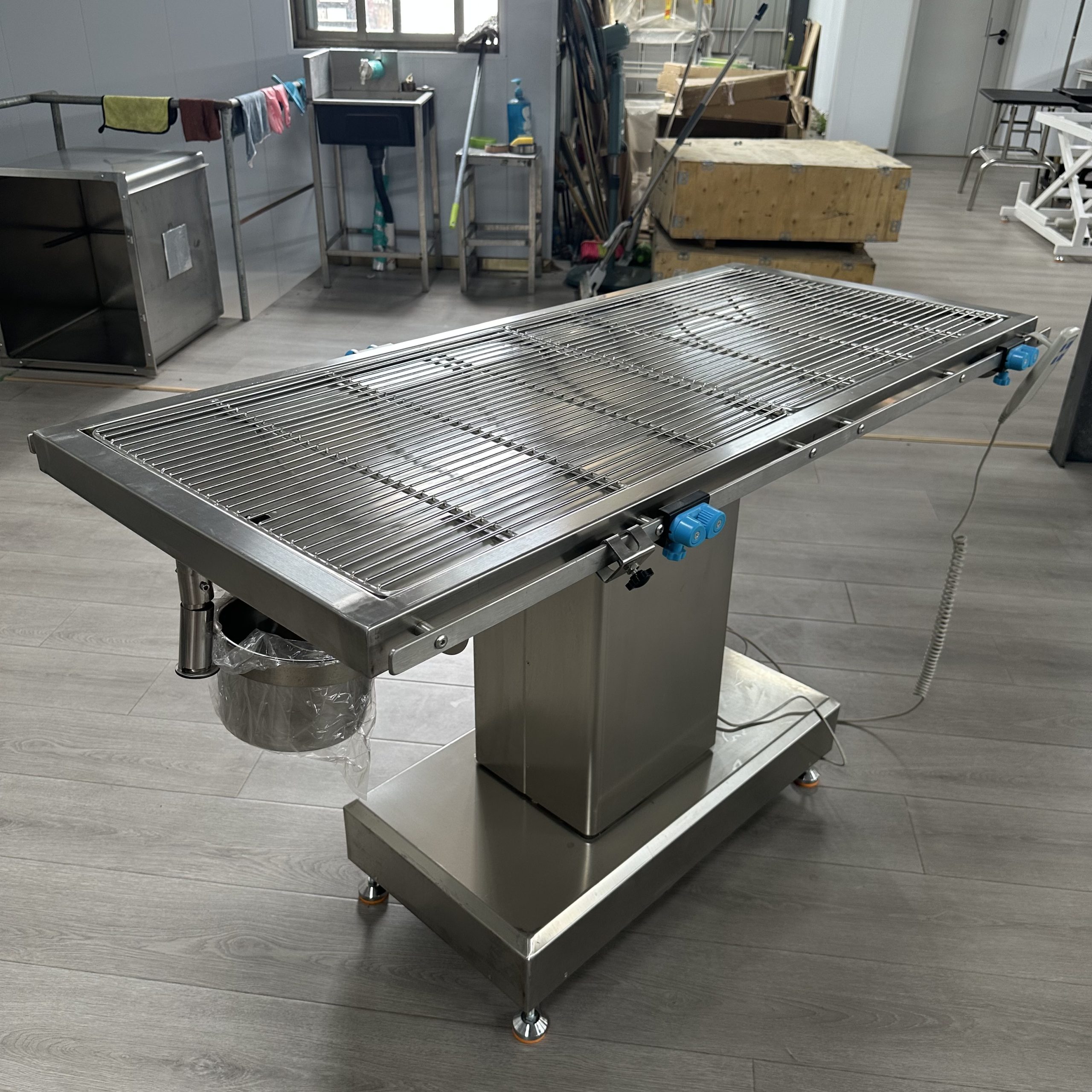
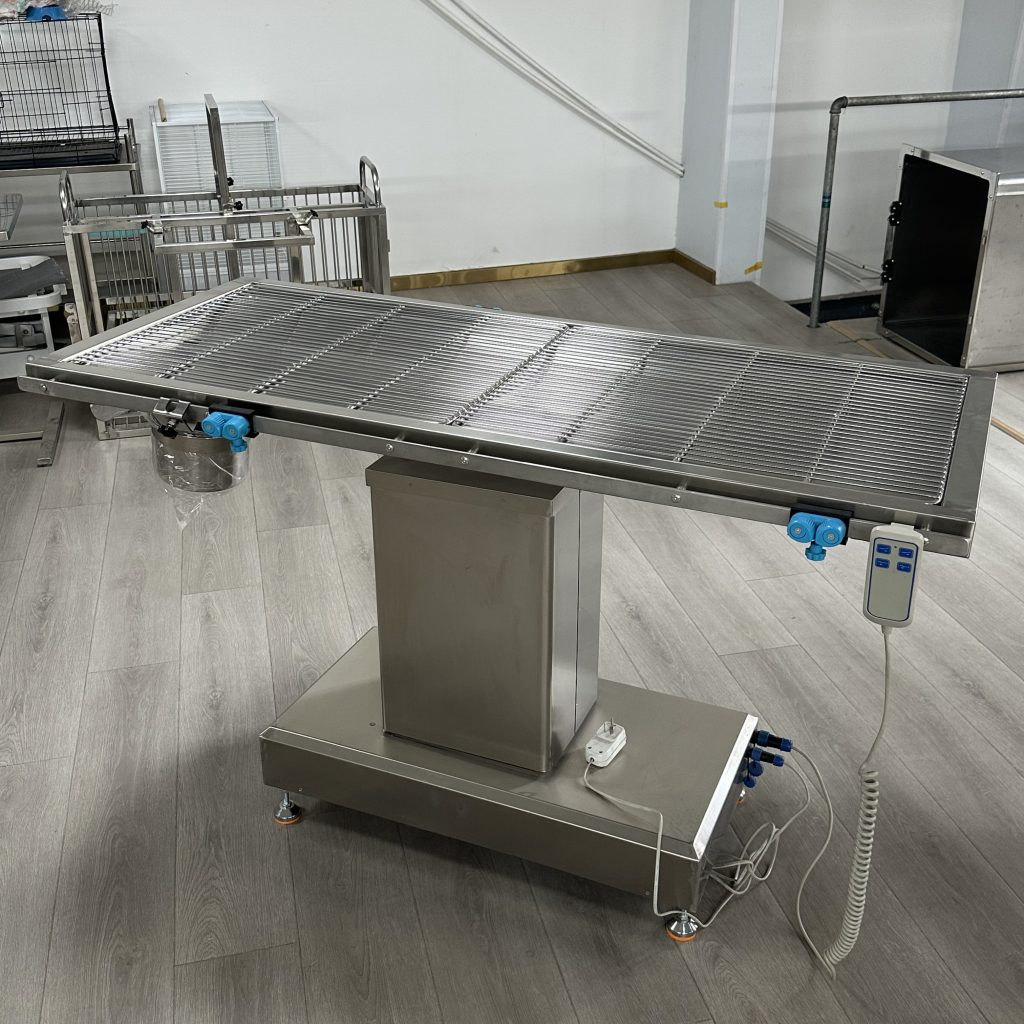
For example, an operating table should not be judged only by maximum load. Veterinary surgical equipment buyers should consider minimum and maximum working height, platform dimensions, movement range, stability through expected positions, drainage where relevant, accessory attachment, clearance around the base, emergency lowering behavior, and the way the table is cleaned. Likewise, surgical lighting should not be judged by a single illumination number. The veterinary surgical equipment buyer must assess field coverage, positioning range, shadow management, heat, control access, ceiling or mobile installation requirements, and the ability to clean handles and external surfaces.
Create a distinction between mandatory, preferred, and optional requirements. Mandatory requirements are conditions without which the veterinary surgical equipment cannot safely or effectively support the defined workflow. Preferred requirements improve efficiency but can be traded against cost. Optional features are desirable only if their value can be demonstrated. This hierarchy prevents a salesperson from shifting the discussion toward impressive specifications that do not solve the veterinary surgical equipment buyer’s real constraints.
A useful test is to ask every stakeholder to complete the same sentence: “This veterinary surgical equipment purchase is successful if…” A surgeon may focus on positioning and access; a technician may emphasize setup and cleaning; a manager may prioritize uptime and cost; facilities staff may focus on utilities and maintenance. Procurement should reconcile these views before requesting quotations.
Comparing Purchase Price Instead of Total Cost of Ownership
The second common mistake is allowing the quotation total to dominate the decision. Purchase price matters, but it is only one component of the financial impact of veterinary surgical equipment. A lower-priced unit can become the expensive option when it requires proprietary consumables, frequent replacement parts, specialist installation, high freight costs, repeated calibration, or long periods out of service.
Total cost of ownership should be estimated over a realistic planning horizon, often three to seven years depending on the veterinary surgical equipment category and the facility’s accounting policy. The calculation does not need false precision. Its purpose is to expose cost categories that would otherwise remain invisible. Use the same assumptions for every veterinary surgical equipment supplier, state uncertainties, and run a sensitivity check for high-impact variables such as procedure volume, consumable price, service frequency, and downtime.
Consumables deserve special attention. Ask whether the veterinary surgical equipment uses standard or proprietary items, whether more than one approved source exists, what minimum order quantities apply, and how long the consumables can be stored. A low equipment price can be a commercial strategy to create long-term dependence on expensive single-source supplies. Buyers should calculate cost per procedure and annual cost at expected volume, not merely the price of one pack.
Downtime also has a measurable cost. When veterinary surgical equipment is unavailable, the facility may reschedule procedures, transfer cases, rent a temporary unit, pay overtime, or lose client confidence. Request typical response times, remote troubleshooting options, technician coverage, spare-unit policies, and the location of common parts. A vague statement such as “global service available” is not a service plan.
Total Cost of Ownership Model
| Cost category | Questions for the veterinary surgical equipment supplier | Calculation approach |
| Purchase and configuration | What is included in the veterinary surgical equipment price? Which accessories are optional? | Base unit + required accessories + taxes + financing |
| Shipping and installation | Who pays freight, insurance, duties, unloading, mounting, and commissioning? | Landed cost to the final room |
| Facility preparation | Are new outlets, supports, gas connections, network ports, or structural work required? | Contractor estimate + permits + internal labor |
| Consumables | Which items are proprietary, single-use, or limited by shelf life? | Cost per case × expected annual case volume |
| Preventive maintenance | What service interval, parts, calibration, and labor are required? | Annual planned service cost × ownership years |
| Repairs and spare parts | Which parts fail or wear, and where are they stocked? | Expected repair cost + critical spare inventory |
| Training | Is initial and refresher training included? | Staff hours + trainer fees + travel |
| Downtime | What happens while veterinary surgical equipment is unavailable? | Lost contribution, rental, transfer, and rescheduling cost |
| End of life | Is deinstallation, data removal, disposal, or recycling required? | Retirement cost minus residual value |
Do not use warranty length as a substitute for cost analysis. A long warranty may exclude labor, travel, wear parts, software, accessories, misuse, or freight. Ask for the full warranty terms before purchase and identify the practical process for making a claim. The relevant question is not “How many years?” but “Which failure, in which location, is covered by whom, within what response time, and at whose cost?”
When comparing veterinary surgical equipment, calculate both the expected cost and a downside scenario. If a product is still financially attractive when consumables increase in price, a major component fails, or service takes longer than promised, the business case is more resilient. If the decision works only under perfect assumptions, it is not a robust purchase.
Treating Certifications and Documentation as a Checkbox
Documentation should reduce uncertainty, but veterinary surgical equipment buyers often treat it as a yes-or-no field. A veterinary surgical equipment supplier says the veterinary surgical equipment is “certified,” sends a cropped image, and the review ends. That is not verification. The veterinary surgical equipment buyer must determine which requirement applies, which organization issued the document, what the document actually covers, whether it remains valid, and whether the exact quoted model and configuration fall within scope.
Regulatory treatment varies by product and jurisdiction. For example, the FDA’s current animal-device information explains that devices intended for animal use generally do not go through the same premarket approval pathway as human medical devices. It also notes that animal devices remain subject to oversight and that manufacturers or distributors are responsible for safety, effectiveness, and labeling. A veterinary surgical equipment buyer should never convert “no premarket approval required” into “no evidence required.” Instead, the veterinary surgical equipment buyer should request a stronger technical file for veterinary surgical equipment, including intended use, labeling, risk information, test evidence, instructions, and traceability.
International standards can be relevant, but applicability must be established rather than assumed. IEC 60601-1 addresses general basic safety and essential performance for medical electrical equipment, and IEC 60601-1-2 addresses electromagnetic disturbances. ISO 14971 provides a risk-management process for medical devices and was confirmed as current in 2025. These references may inform supplier controls or market requirements, but a veterinary surgical equipment buyer should ask the veterinary surgical equipment supplier to identify the precise standard, edition, amendments, test scope, deviations, and product model covered. A generic claim that all veterinary surgical equipment “meets international standards” is too vague to audit.
Electrical certification marks also require context. In the United States, OSHA’s Nationally Recognized Testing Laboratory program recognizes organizations to certify certain products against applicable safety test standards. The mark should be connected to the certification body, product category, model, and relevant standard. A familiar-looking mark on veterinary surgical equipment should be verified, not accepted as decoration.
Request documents in a structured data room or procurement folder. Use consistent filenames and record the date received. At minimum, consider the following categories when relevant to the product:
Model-specific datasheet and dimensional drawing.
Intended-use statement, operating limitations, contraindications, and warnings.
User manual and installation instructions in the required language.
Cleaning, disinfection, and sterilization instructions.
Electrical information, plug and voltage options, battery details, and electromagnetic information.
Risk-management or safety summary appropriate to the buyer’s review rights.
Full certificates and test reports, with model coverage and verification details.
Quality-system information where relevant to the veterinary surgical equipment supplier assessment.
Serial-number format, labeling sample, manufacturing location, and traceability process.
Warranty, preventive maintenance, calibration, spare-parts, and end-of-life policy.
Do not demand every document for every item. A stainless-steel stand and a powered electrosurgical system do not require identical due diligence. Use a risk-based approach: the greater the potential consequence of failure, the deeper the verification. The objective is not paperwork for its own sake; it is enough evidence to make a defensible decision about the veterinary surgical equipment being purchased.
Ignoring Cleaning, Disinfection, and Sterilization Compatibility
Veterinary surgical equipment can perform well and still be unsuitable if it cannot be reprocessed within the clinic’s established infection-control system. This mistake is common because cleanability is difficult to see in a product photograph. Seams, exposed fasteners, unsealed interfaces, narrow gaps, rough welds, absorbent materials, complex controls, and inaccessible joints can increase cleaning effort or leave areas that are hard to inspect.
The veterinary surgical equipment buyer should distinguish cleaning, disinfection, and sterilization. These are not interchangeable terms. CDC guidance explains that critical items contacting sterile tissues or fluids should be sterile when used and that heat-stable surgical instruments are commonly processed with steam sterilization. Veterinary facilities should apply their professional infection-control policies, applicable local guidance, and manufacturer instructions to the exact device and intended use. The key procurement point is that veterinary surgical equipment must be compatible with the facility’s validated reprocessing method.
Ask the veterinary surgical equipment supplier for written instructions before ordering. The instructions should name compatible agents, concentrations, contact times where applicable, temperature or moisture limits, disassembly steps, drying requirements, and components that must not be immersed or sterilized. If the veterinary surgical equipment supplier merely says “easy to clean,” the evidence is incomplete. A veterinary surgical equipment buyer should test whether the instructions can be followed with the staff, products, sterilizers, and turnaround times already available.
Material claims also need precision. “Stainless steel” is not a complete specification. Grade, finish, fabrication quality, weld treatment, and exposure conditions affect durability. Likewise, a smooth plastic housing may be damaged by a particular disinfectant or repeated wiping. Request material information for high-contact and reprocessed components, then compare it with the chemicals and methods used by the facility.
AAHA infection-control guidance encourages veterinary practices to create evidence-based standard operating procedures for routine tasks such as cleaning and disinfection, as well as staff education and surveillance. Procurement should connect directly to those procedures. Before approving veterinary surgical equipment, involve the person responsible for infection prevention and ask them to review the cleaning instructions, surface design, disassembly needs, and storage conditions.
A practical cleanability review should answer five questions:
1. Can staff reach and visually inspect every routinely contaminated surface?
2. Can removable components be detached without tools or ambiguous steps?
3. Are the approved cleaning and disinfection methods already available in the facility?
4. Will repeated reprocessing damage labels, seals, cables, upholstery, coatings, or controls?
5. Can staff complete the process within the required room-turnaround time?
If any answer is unknown, the veterinary surgical equipment is not ready for approval. Request a demonstration using the actual instructions, document the process, and include reprocessing requirements in staff training and acceptance testing.
Overlooking Space, Utilities, Installation, and Compatibility
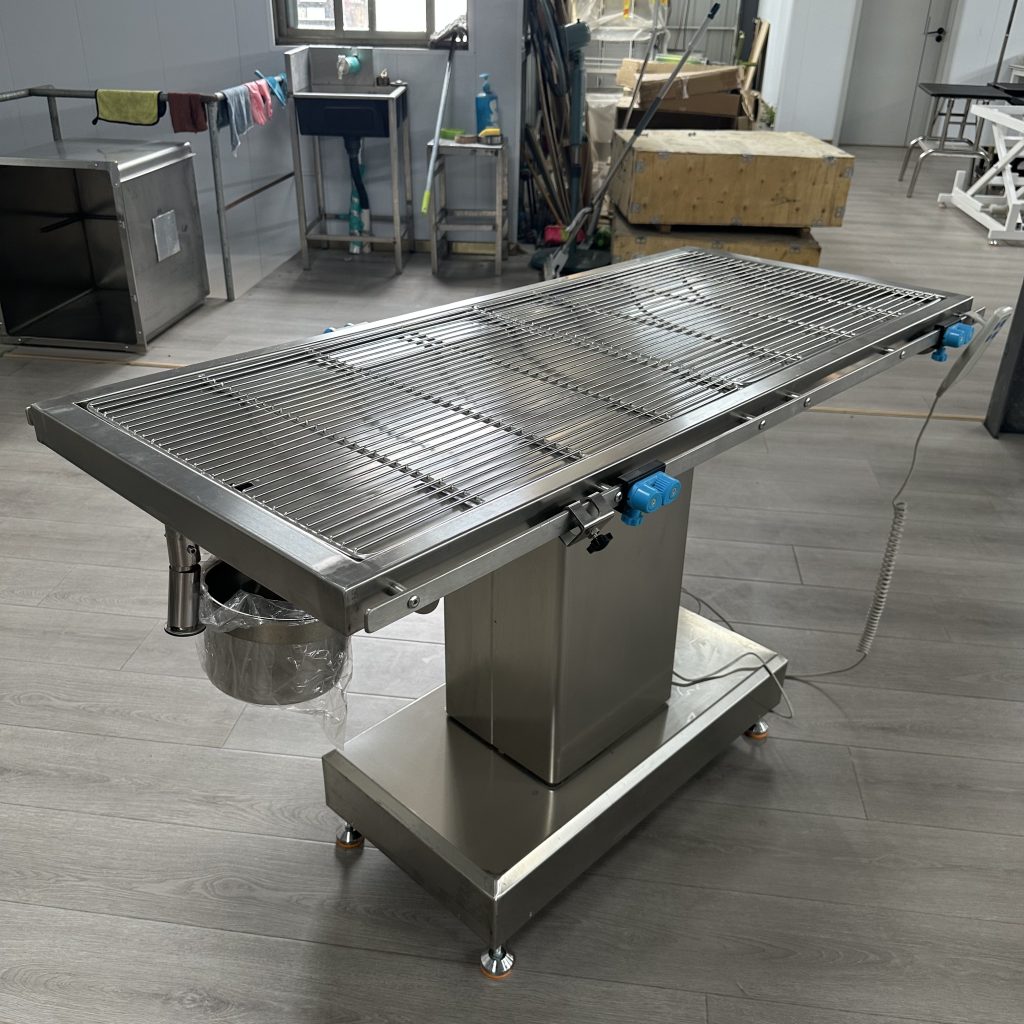
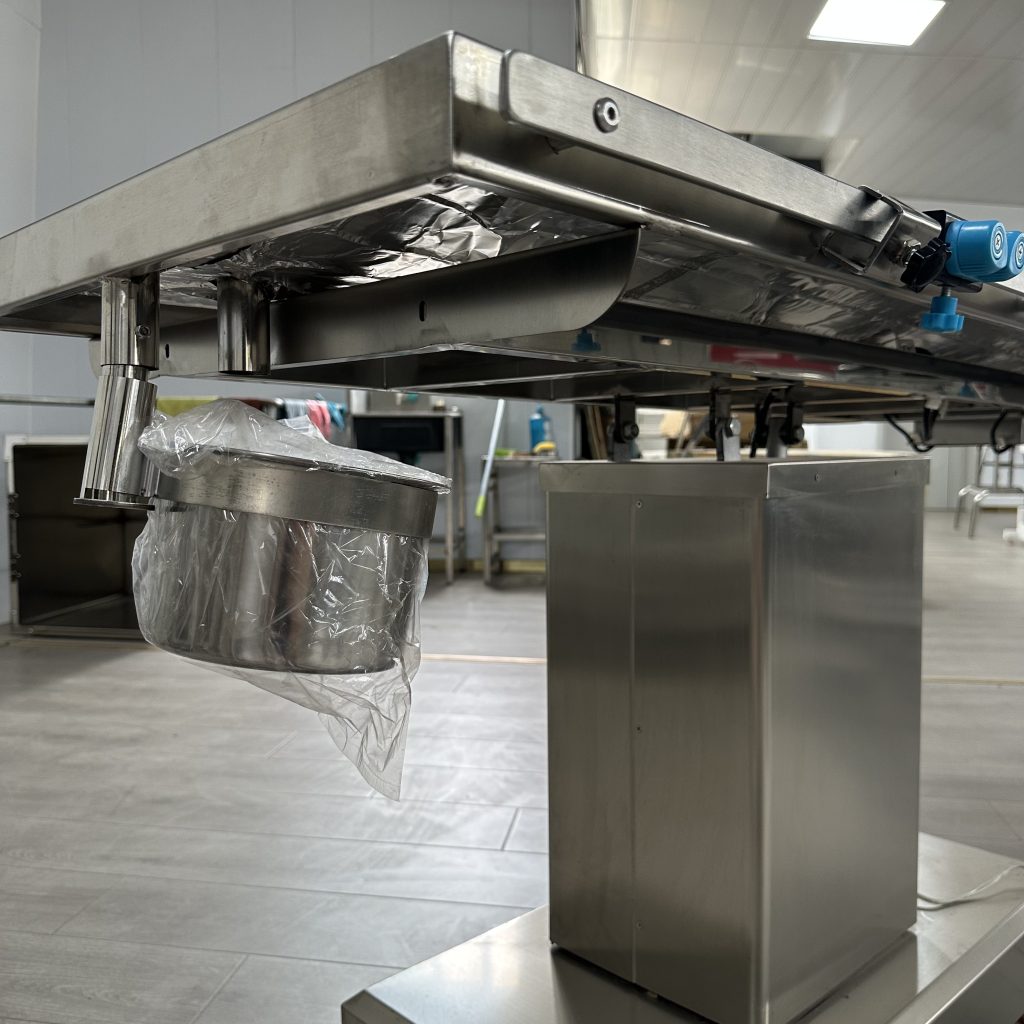
Product dimensions alone do not prove that veterinary surgical equipment will fit. Buyers must account for doorways, elevators, turning radius, packaging dimensions, loading limits, ceiling height, wall construction, floor conditions, clearance for movement, staff circulation, and access for maintenance. A device that fits the room on paper may still be impossible to deliver or position.
Create a site-readiness survey before issuing the purchase order. Record room dimensions, access-route measurements, electrical supply, plug type, grounding, gas or vacuum connections, network requirements, environmental limits, structural mounting points, and any need for shielding or special ventilation. Assign responsibility for each preparation task and require the veterinary surgical equipment supplier to confirm the information in writing.
Compatibility also extends beyond physical connections. If veterinary surgical equipment exchanges data, confirm supported protocols, file formats, operating systems, cybersecurity responsibilities, user-account controls, update policy, backup process, and what happens when the veterinary surgical equipment supplier stops supporting the software. Never accept “USB,” “Wi-Fi,” or “compatible with hospital systems” as a complete integration statement.
For electrical veterinary surgical equipment, confirm voltage, frequency, rated power, battery chemistry, charging method, leakage or protective measures where relevant, and the exact plug supplied. Ask whether a transformer or adapter changes certification, warranty, performance, or cleaning. Temporary adapters and extension cords should not become a permanent solution to inadequate site planning.
Compatibility between accessories and the main unit must be version-controlled. Mounting rails, clamps, cables, sensors, instrument connections, hoses, bulbs, handles, batteries, and software licenses may differ between product generations. The quotation should list part numbers and quantities rather than vague terms such as “standard accessories.” Photographs can support identification, but they should not replace a written veterinary surgical equipment configuration schedule.
Installation responsibility must be explicit. State who unloads, moves, assembles, mounts, connects, tests, commissions, and trains. If a ceiling-mounted surgical light requires structural assessment, the veterinary surgical equipment supplier should provide loads and drawings early enough for an engineer or qualified contractor to review. If commissioning requires special tools or passwords, identify them before shipment.
Choosing Specifications Without Testing Usability
Specifications describe capability; usability determines whether staff can use that capability reliably under pressure. A control can be technically functional but poorly placed. A display can be bright but hard to read from the working position. A table can offer many movements while making emergency repositioning slow or confusing. Veterinary surgical equipment should be evaluated by the people who will use, clean, and maintain it.
Whenever practical, conduct a structured demonstration or sample evaluation. Do not let the veterinary surgical equipment supplier control the entire demonstration. Prepare representative tasks in advance and ask multiple staff members to perform them using the supplied instructions. Observe setup time, reach, visibility, control logic, alarm interpretation, movement, noise, cable management, cleaning, and reset. Record errors and questions rather than coaching users through every step.
Veterinary surgical equipment usability testing does not need to simulate a live procedure. A dry run with a training model, positioning aid, or empty room can reveal most workflow conflicts without involving a patient. The test should cover normal use, predictable interruptions, and recovery from common mistakes. For example, what happens after a power interruption? Can the user recognize battery status? Is an accessory easy to attach incorrectly? Can controls be operated while wearing expected protective equipment?
Training must be designed around user roles. The surgeon, technician, cleaner, biomedical or maintenance contact, and administrator may need different information. A single sales demonstration is not a complete training program. Require training objectives, materials, attendance records, and a plan for new employees. If veterinary surgical equipment includes advanced functions that are rarely used, schedule refresher training before those functions are needed.
Avoid the opposite mistake of rejecting every unfamiliar interface. Change can improve performance, but the benefit must exceed the learning cost and use-related risk. Compare veterinary surgical equipment with a consistent task list, not personal preference alone. When users dislike a feature, determine whether the cause is poor design, inadequate training, a mismatch with existing workflow, or simple unfamiliarity.
Underestimating Service, Spare Parts, and Product Life Cycle
The real supplier relationship begins after installation. Veterinary surgical equipment can remain in service for years, while product models, software versions, distributors, and local technicians change. Veterinary surgical equipment buyers who focus only on delivery may discover later that a simple cable, seal, controller, battery, handle, or sensor has an excessive lead time or is no longer supported.
Ask for a service model, not a promise. Identify the legal entity providing support, geographic coverage, business hours, escalation route, remote-support capability, on-site response target, technician qualifications, and charges after warranty. If support is provided through a distributor, clarify the responsibilities of both manufacturer and distributor. The clinic should know who owns the case from first report to verified closure.
Request a recommended spare-parts list divided into user-replaceable, technician-replaceable, and factory-only items. Ask for current prices, expected lead times, shelf-life limits, storage requirements, and tools. For high-criticality veterinary surgical equipment, consider holding selected low-cost parts locally. The correct inventory depends on failure consequence, part cost, supply time, and whether a backup unit exists.
Preventive maintenance should be specific. The veterinary surgical equipment supplier should state intervals, tasks, measurements, calibration needs, replacement parts, acceptable tolerances, documentation, and qualifications required. “Annual maintenance recommended” is not enough. The facility must know what work is required and whether it can be performed by local personnel without invalidating warranty or safety claims.
Software and connected functions add life-cycle questions. Confirm how updates are delivered, whether they are mandatory, how long the version will be supported, whether updates change user workflow, and how data can be exported before retirement. If veterinary surgical equipment depends on a cloud service or subscription, determine what continues to work when the subscription ends or the network is unavailable.
Finally, request an expected support period and end-of-life notification policy. No veterinary surgical equipment supplier can guarantee indefinite availability, but a mature veterinary surgical equipment supplier should be able to describe how it communicates discontinuation, last-buy opportunities, replacement models, data migration, and spare-parts support. Life-cycle transparency is a stronger signal than an unrealistically absolute promise.
Failing to Verify the Supplier and Exact Configuration
A company profile, marketplace badge, or professional website does not prove that the seller controls the product, documentation, manufacturing process, or service network. Veterinary surgical equipment supplier due diligence should be proportionate to risk and order value. For critical veterinary surgical equipment, veterinary surgical equipment buyers should verify the legal entity, business location, manufacturing or distribution role, quality controls, traceability, complaint handling, and authority to provide the quoted documents.
Separate veterinary surgical equipment supplier capability from product conformity. A factory can be well organized while a particular model lacks required evidence. Conversely, a product may have credible test evidence while the trading partner cannot provide reliable service. Both levels must pass. Ask who manufactures the exact veterinary surgical equipment, where final assembly and inspection occur, who owns the design, and who will appear on labels, invoices, certificates, and warranty documents.
Use live or recorded verification carefully. A video tour can show facilities and production activity, but it should be tied to a checklist and date. Request views of veterinary surgical equipment labeling, serial-number controls, inspection records, packaging, and the exact model. Sensitive information can be redacted, but the veterinary surgical equipment supplier should still provide enough evidence to demonstrate traceability.
Veterinary surgical equipment samples and pre-shipment inspections must use a locked configuration. Otherwise, the veterinary surgical equipment buyer may approve one unit and receive another version. Create a configuration baseline with model, revision, voltage, plug, software version, accessories, finishes, labels, manuals, packaging, and included spares. Any later change should require documented approval. This discipline is especially important when veterinary surgical equipment is customized or private-labeled.
Veterinary surgical equipment payment terms should follow verified milestones, not optimism. The appropriate structure depends on the transaction, but veterinary surgical equipment buyers can connect payments to approved documents, configuration confirmation, successful factory testing, shipment evidence, and site acceptance. Commercial protections are most effective when the acceptance standard is objective and agreed before production.
A Better Veterinary Surgical Equipment Evaluation Framework
A strong procurement process converts preferences into weighted criteria. The score should not make the decision automatically; it should expose trade-offs and prevent one attractive feature or low price from overwhelming higher-risk issues. Mandatory requirements remain pass or fail, while scored criteria differentiate compliant options.
The following example can be adapted to the product category. Weights should reflect the facility’s actual priorities. A clinic with limited local service may assign more weight to maintainability, while a high-volume referral center may emphasize uptime and workflow.
Example Weighted Supplier Scorecard
| Evaluation area | Suggested weight | What to evaluate |
| Clinical and workflow fit | 20% | Intended procedures, species range, capacity, positioning, access, and task performance |
| Safety and technical evidence | 15% | Veterinary surgical equipment labeling, risk information, test reports, and applicable documentation |
| Cleaning and reprocessing | 12% | Surface design, instructions, chemical and sterilization compatibility, and turnaround time |
| Usability and training | 10% | Controls, visibility, setup, error recovery, manuals, and role-based training |
| Site and system compatibility | 10% | Dimensions, utilities, installation, accessories, software, and data integration |
| Service and maintainability | 13% | Response, parts, preventive maintenance, calibration, repair route, and support period |
| Total cost of ownership | 15% | Landed cost, consumables, maintenance, downtime, and retirement |
| Supplier reliability | 5% | Traceability, communication, references, change control, and complaint handling |
| Total | 100% | Score only after mandatory veterinary surgical equipment requirements pass |
Use a defined rating scale, such as 0 for no evidence, 1 for major gaps, 2 for partial compliance, 3 for acceptable, 4 for strong, and 5 for verified best fit. Require evaluators to cite evidence for each score. A high score without a document, demonstration, or test should be challenged.
Also perform a red-flag review outside the weighted total. A veterinary surgical equipment supplier should not compensate for a critical failure with points in unrelated areas. Examples of stop conditions include an unsafe demonstration, inconsistent model identity, falsified or unverifiable documents, refusal to provide cleaning instructions, undisclosed configuration changes, or inability to state who provides service.
Acceptance Testing: Do Not Let Delivery Become the Finish Line
Acceptance testing confirms that the delivered veterinary surgical equipment matches the approved order and performs the agreed functions. It should be planned before the purchase order, because criteria introduced after delivery are difficult to enforce. Depending on complexity, veterinary surgical equipment testing may occur at the factory, at the veterinary surgical equipment buyer’s site, or in both locations.
Factory acceptance testing can verify configuration, labeling, accessories, basic operation, movement, alarms, electrical options, software version, workmanship, and packaging before shipment. Site acceptance testing adds checks that depend on the real environment: delivery condition, installation, utilities, integration, staff tasks, cleaning workflow, and training. Neither inspection should be reduced to “power on successful.”
Site Acceptance Checklist
| Checkpoint | Acceptance evidence | Result |
| Identity and configuration | Model, serial number, revision, voltage, software, accessories, and quantities match the order | Pass / Fail |
| Delivery condition | Packaging and veterinary surgical equipment show no unrecorded damage or contamination | Pass / Fail |
| Documents | Required manuals, cleaning instructions, certificates, service contacts, and warranty are complete | Pass / Fail |
| Installation | Mounting, leveling, connections, clearances, and utilities meet approved requirements | Pass / Fail |
| Functional test | Every contracted movement, control, display, alarm, output, and safety feature is demonstrated | Pass / Fail |
| Workflow test | Representative users complete agreed setup, operation, reset, and shutdown tasks | Pass / Fail |
| Reprocessing review | Staff can follow the veterinary surgical equipment cleaning or sterilization instructions | Pass / Fail |
| Training | Required roles complete training and receive usable reference materials | Pass / Fail |
| Baseline records | Photos, readings, configuration files, and maintenance dates are archived | Pass / Fail |
| Open issues | Each deviation has an owner, corrective action, due date, and payment consequence | Pass / Fail |
Record objective results, photographs, readings, software versions, and deviations. If a requirement cannot be tested, state why and define an alternative. Conditional acceptance should list every unresolved item, responsible party, due date, and consequence. Silence should never be interpreted as acceptance.
After acceptance, enter the veterinary surgical equipment into the facility’s asset system. Record the serial number, location, responsible department, installation date, warranty end date, preventive-maintenance schedule, critical parts, service contacts, and document location. This turns the purchase file into a life-cycle record rather than an archive that no one can find when a problem occurs.
Step-by-Step Buying Process
The following process keeps the decision evidence-driven without making procurement unnecessarily slow.
Define the use case. Document procedures, species, patient range, expected volume, users, room, and operational constraints for the veterinary surgical equipment.
Map the workflow. Review patient movement, staff positions, supporting devices, contaminated zones, cleaning, storage, and room reset.
Classify requirements. Separate mandatory, preferred, and optional needs. Assign pass-or-fail criteria to safety-critical requirements.
Complete the site survey. Verify access, dimensions, utilities, mounting, network, environment, and installation responsibility.
Issue a structured request for quotation. Require every veterinary surgical equipment supplier to answer the same questions and price the same veterinary surgical equipment configuration.
Verify documents. Check model coverage, scope, edition, validity, issuing body, labeling, manuals, cleaning instructions, and service terms.
Evaluate usability. Conduct a demonstration or dry-run task test with representative users and record observations.
Calculate total cost. Compare landed cost, consumables, maintenance, parts, training, downtime, and retirement over the same period.
Assess the veterinary surgical equipment supplier. Confirm legal identity, role, manufacturing or distribution control, traceability, change control, and support capability.
Lock the configuration. Attach a model-specific schedule to the purchase order, including every accessory and version.
Approve the acceptance protocol. Define factory and site tests, documents, responsible parties, and resolution of deviations.
Manage the asset. After veterinary surgical equipment acceptance, schedule maintenance, retain baselines, train new staff, and review performance.
This process may appear more demanding than selecting a product from a catalog. In reality, it moves effort to the stage where changes are inexpensive. The cost of one careful site survey or document review is usually far lower than the cost of modifying a room, replacing incompatible accessories, or losing weeks to a service dispute.
Se avete bisogno di attrezzature mediche e per la toelettatura degli animali domestici o di altri servizi, non esitate a contattarci!
E-mail:chengguanaurora@163.com
Whatsapp:+86 150 6970 3696
Facebook:https://www.facebook.com/profile.php?id=61574370540735&locale=zh_CN
Conclusione
The most damaging buying mistakes are rarely caused by a lack of veterinary surgical equipment options. They are caused by weak definitions, incomplete evidence, and decisions that end at the purchase price. Successful procurement begins by defining the clinical workflow and continues through site planning, document verification, usability testing, reprocessing review, life-cycle costing, veterinary surgical equipment supplier assessment, and objective acceptance.
Veterinary surgical equipment should be treated as a long-term operational system. The correct choice must fit the intended procedures and patients, integrate with the room and supporting devices, withstand the facility’s cleaning process, remain serviceable, and provide a defensible record of what was evaluated and delivered. A feature that cannot be verified, used, cleaned, maintained, or supported has little practical value.
Before approving veterinary surgical equipment, ask one final question: “What assumption are we still making that should be tested?” That question exposes missing dimensions, unclear accessories, vague certificates, unsupported service promises, and unpriced consumables. Replacing those assumptions with written evidence is the most reliable way to protect patient care, staff time, and capital.
The strongest purchase is not automatically the cheapest or the most complex. It is the veterinary surgical equipment decision that remains sound when the product is installed, used repeatedly, cleaned, serviced, audited, and eventually replaced.
Domande frequenti
What should be considered first when buying veterinary surgical equipment?
Begin with the clinical and operational use case, not the brand or price. Define intended procedures, patient range, case volume, users, room conditions, cleaning workflow, utilities, and service environment. Once these needs are clear, veterinary surgical equipment can be compared against consistent mandatory and preferred criteria.
Is the lowest-priced veterinary surgical equipment usually the most economical?
Not necessarily. Compare total cost of ownership, including required accessories, freight, installation, facility work, consumables, preventive maintenance, calibration, repair parts, training, downtime, and disposal. Low-priced veterinary surgical equipment can become expensive when it depends on proprietary consumables or distant service.
Which certifications should veterinary surgical equipment have?
There is no single answer for every product and market. Requirements depend on the veterinary surgical equipment category, intended use, electrical or radiation characteristics, destination country, workplace rules, and local authorities. Ask the veterinary surgical equipment supplier to identify the specific applicable requirements and provide complete, verifiable evidence covering the exact veterinary surgical equipment model. Do not rely only on a logo or generic declaration.
Does the FDA approve veterinary surgical equipment before sale in the United States?
FDA guidance states that devices intended for animal use generally do not require 510(k), PMA, or other premarket approval. However, the FDA retains oversight, and manufacturers or distributors are responsible for making animal devices safe, effective, and properly labeled. Buyers should therefore verify veterinary surgical equipment documentation and should not treat the absence of premarket approval as proof of quality.
How can a clinic evaluate cleaning and sterilization before purchase?
Request model-specific written instructions and compare them with the clinic’s infection-control procedures, chemicals, sterilizers, staff skills, and turnaround targets. Inspect seams, joints, controls, cables, removable parts, and material compatibility. Conduct a dry-run reprocessing demonstration for veterinary surgical equipment that will contact contaminated areas or support sterile procedures.